

Best Home Gym Equipment For Labor Day 2026
🏆 Top Picks at a Glance
 #1
Product listing
Home Gym System with 122.5 lbs Weight Stack, All-in-One Full Body Workout Machine with Pulley System & Leg Press, Heavy Duty Strength Training Equipment for Home Gym, Garage & Apartment
Check Price
 #2
Product listing
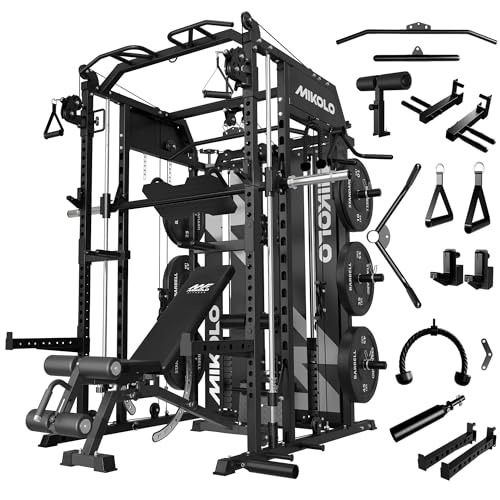
Mikolo Smith Machine with Weight Stack, Power Cage Home Gym System with LAT Pulldown & Cable Crossover, Multi-Functional Trainer with Dual Pulley System, Includes 14+ Free Attachments
Check Price
 #3
Product listing
NICEPEOPLE Adjustable Weight Bench for Home Gym, 660LBS Capacity Workout Bench with 8 Backrests for Chest Shoulders Arms, Compact and Foldable Strength Bench for Small Space Apartment Room
Check Price
Choose home-gym equipment by fit, training needs, load requirements, and budget—not by attachment count alone. This roundup compares four options, from all-in-one systems to a compact bench and a portable push-up board.
⚡ Quick Answer: Best Home Gym Equipment
Best All-in-One Trainer: Mikolo Smith Machine with Weight Stack, Power Cage Home Gym System with LAT Pulldown & Cable Crossover, Multi-Functional Trainer with Dual Pulley System, Includes 14+ Free Attachments
$2199.99 — Check Price
Table of Contents
Main Points
- Start with the foundation. Gym Science’s priority table classifies power racks, barbells, and weight plates as Must Have; adjustable benches and dumbbells as High Priority; flooring and pull-up bars as Nice to Have; and cable machines as Luxury. If you cannot yet load squats, presses, rows, and hinges, a multi-attachment machine is not a substitute for the basics.
- Do not confuse a weight stack with unlimited strength potential. The second all-in-one system advertises a 122.5-pound stack, which can cover general fitness and moderate hypertrophy but gives heavy lifters a finite ceiling. The Mikolo’s Smith-machine and dual-pulley layout may be more versatile, but verify its resistance curve, pulley ratio, cable travel, frame steel, footprint, and warranty before calling it serious equipment.
- Treat the NICEPEOPLE bench’s 660-pound rating as a starting claim, not a buying decision. Confirm whether that number includes the lifter, then inspect the hinge lock, base width, pad gap, backrest angles, and warranty. Its eight backrest positions and foldable footprint are useful in an apartment; stability under a hard dumbbell press matters more than compact storage.
- this kit in the accessory lane. A push-up board, Pilates bar, resistance bands, and ab wheel can support warm-ups, travel circuits, and basic conditioning, but they do not replace a rack, barbell, plates, or progressive cable station. It is a sensible small-space add-on. It is a weak choice as the entire strength program if your goal is measurable 1RM progress.
- Use real rack benchmarks to police Labor Day pricing. HomeFitnessLab lists the REP PR-4000 at $699 with a 1,000-pound rating, 3-by-3-inch 11-gauge uprights, and 1-inch bench-zone spacing; its budget Titan T-2 pick is $399, rated to 850 pounds, with 2-by-3-inch uprights and 2-inch spacing throughout. Those figures show what serious steel and adjustment precision look like, while HomeFitnessLab’s approximate $400-$2,500 cable-machine range is a reminder not to pay premium money for undocumented capacity or warranty coverage.
Our Top Picks
Affiliate disclosure: if you buy through these links, we may earn a commission at no extra cost to you.
Factors to Consider
Frequently Asked Questions
What should I buy first for a home gym?
Start with a rack or squat stand, barbell, weight plates, and a stable bench; that setup covers squats, presses, deadlifts, rows, and most of your strength work. HomeFitnessLab’s priority table labels racks, barbells, and plates Must Have, with benches High Priority, so cable machines and specialty accessories can wait.
Is the REP PR-4000 worth $699?
For a serious lifter with room to expand, it is a strong long-term choice: HomeFitnessLab lists the PR-4000 at $699 with a 1,000-pound rating, 3-by-3-inch 11-gauge uprights, and 1-inch Westside spacing through the bench zone. Its reported 500-plus-pound squat test with zero flex is a useful data point, but it does not replace checking anchoring, safety hardware, delivery requirements, and the rack’s fit in your room.
Is the Titan T-2 good enough for a budget home gym?
It can be. HomeFitnessLab lists the $399 T-2 as a 2-by-3-inch rack rated for 850 pounds, which is enough for many intermediate lifters when the rack is properly anchored. The compromise is 2-inch hole spacing throughout, so lifters who want finer bench and safety adjustments or broader accessory expansion should spend more for a more precise rack.
How much does a complete home gym cost?
HomeFitnessLab’s listed ranges put power racks at about $350-$900, barbells at $60-$350, adjustable benches at $120-$400, and cable machines at $400-$2,500. Budget for the foundation first; flooring, storage, and specialty attachments can quietly cost more than the barbell if you buy everything at once.
How much space do I need for a power rack?
There is no safe one-size-fits-all number: measure the rack footprint plus barbell sleeve clearance, bench movement, plate storage, walkways, ceiling height, and the path of dropped noise. In a small apartment, footprint, storage position, noise, and bench clearance can matter more than maximum load, so choose the smallest setup that still lets you train without obstruction.
Do I need a cable machine?
No. The research priority table puts cable machines in the Luxury tier, and a rack, barbell, plates, and bench already cover the major compound lifts. Buy a cable machine when you have a specific progression or exercise need—high-volume accessories, adjustable resistance, or shared use—not because an empty station looks impressive.
How do I verify a Labor Day 2026 deal?
Check the product’s recent price, shipping and assembly costs, seller, return policy, warranty, and the actual contents of any bundle before calling it a discount. Also check whether the equipment has the load range and increment options to support your future 1RM; a cheap machine you outgrow is not a deal.
Conclusion
For most serious home gyms, put the money into an all-in-one home gym system or an adjustable bench that fits your space and training plan before buying novelty accessories.
Use Labor Day 2026 to buy verified value—not inflated list prices—and spend only on equipment that gives you more load, better adjustment, or more productive training at the same RPE.


