

How To Choose The Right Dumbbells In 2026
Choosing dumbbells in 2026 is not about buying the heaviest set you can afford. It is about matching the load, handle, construction, storage, and available floor space to the way you actually train. The right pair lets you progress without wrecking your form, your flooring, or your budget.
Choose dumbbells based on your current exercises, target repetitions, available progression, and training space. Start with a weight that allows every planned repetition with controlled form, then increase the load or repetitions gradually as your strength improves. For most serious home gyms, durable rubber, urethane, or well-built adjustable dumbbells make more sense than cheap novelty sets, provided the handle, adjustment system, storage, and warranty hold up to regular use.
Quick Answer
Table of Contents
- Quick Answer
- Our Top Picks
- Step 1: Match the Dumbbell to Your Training
- Step 2: Choose the Right Weight and Progression
- Step 3: Compare Dumbbell Construction
- Step 4: Check Your Space, Flooring, and Storage
- Step 5: Avoid the Dumbbell Buying Mistakes That Waste Money
- Frequently Asked Questions
- Sources & References
Our Top Picks
Affiliate disclosure: if you buy through these links, we may earn a commission at no extra cost to you.



Step 1: Match the Dumbbell to Your Training
Start with the movements you will perform, not the dumbbell itself. A dumbbell used for lateral raises, curls, and rear-delt work needs to be much lighter than one used for goblet squats, split squats, rows, or dumbbell bench presses. Your training plan determines the useful load range.
Write down the exercises you expect to perform in your home gym. Include pressing, rowing, lunging, squatting, carrying, and isolation work. A pair that works for dumbbell bench presses may be excessive for shoulder raises. A light pair that is perfect for curls will not give you much room for progression on compound lifts.
Also consider how dumbbells fit with the rest of your equipment. If your power rack already handles barbell squats and your cable machine covers rows and pulldowns, dumbbells may be most valuable for unilateral training, accessory work, carries, and movements that expose strength imbalances. If you do not have a rack, dumbbells may need to cover more of your pressing and lower-body training.
Step 2: Choose the Right Weight and Progression
The correct dumbbell weight is the one that lets you complete your planned repetitions while maintaining stable, controlled form. If your back arches aggressively, your shoulders shift, your knees cave, or you start throwing the weight, the load is too heavy for that movement. ExercisePick makes the same basic point: reduce the weight when form breaks down, and beginners should prioritize technique before chasing heavier resistance.
Use effort as a training guide. If a set is supposed to be challenging but controlled, finish with some reserve rather than turning every repetition into a maximum-effort event. On a dumbbell bench press, that means controlling the descent and keeping both arms working together. On a split squat, it means maintaining balance and depth instead of shortening the range to survive the load.
Progressive overload does not require dramatic jumps. You can add repetitions, increase the dumbbell weight, add a set, improve range of motion, or control the eccentric phase. ExercisePick identifies gradual increases in weight or repetitions as practical ways to build strength over time. Fixed dumbbell sets with small weight increments are useful when you want simple progression. Adjustable dumbbells can be more space-efficient, but only if the adjustment system is quick, secure, and appropriate for your movements.
For a beginner, lighter dumbbells are usually the smarter starting point. The goal is to learn the movement, establish repeatable technique, and build work capacity. A weight that forces ugly repetitions on day one is not an investment in strength. It is an invitation to compensate.
Step 3: Compare Dumbbell Construction
Dumbbell construction affects durability, noise, floor protection, grip, odor, storage, and long-term value. Dumbbells Direct organizes its equipment into categories such as urethane, pro-style, rubber, adjustable, chrome or steel, neoprene, vinyl, and sets. Those categories matter because two dumbbells with the same marked weight can behave very differently in a home gym.
Rubber-coated dumbbells are common because they reduce metal-on-metal contact and are generally more forgiving around home gym flooring. They can still damage weak flooring if dropped, dragged, or repeatedly slammed. Urethane construction is typically positioned as a more premium option and may appeal to lifters who want a durable, cleaner-looking setup, but the extra cost only makes sense if the equipment will see frequent use and the warranty supports the purchase.
Pro-style dumbbells offer a traditional plate-and-handle format. They can work well when you want a configurable setup, but inspect how the plates are secured and how much the finished dumbbell protrudes from each side. A long, awkward dumbbell can interfere with pressing, rows, and storage even when its total weight is adequate.
Neoprene and vinyl dumbbells are better suited to lighter training, warmups, conditioning circuits, and general fitness than to heavy progressive strength work. They are not a replacement for robust fixed dumbbells when your program includes heavy rows, presses, loaded carries, or high-volume lower-body training.
Handles deserve as much attention as the heads. Look for a grip that feels secure without forcing your fingers into an aggressive pinch. Check whether the handle stays usable when your hands are sweaty. On adjustable models, examine the locking mechanism and the transition between the handle and plates. Any looseness, rattling, or unreliable adjustment is a serious problem when the dumbbell is overhead.
Step 4: Check Your Space, Flooring, and Storage
A dumbbell is not a good choice if you cannot use it safely in the room. ExercisePick advises keeping ample surrounding space and removing obstructions that could interfere with movement. That matters during dumbbell bench presses, walking lunges, renegade rows, swings, and carries. A crowded home gym turns a basic lift into a collision problem.
Measure the training area around your bench, squat rack, cable machine, or pull-up station. Account for the dumbbell length, your arm path, and the space needed to set the weights down without hitting a wall or another machine. Do not place dumbbells where they block the rack safeties, interfere with a cable stack, or become a trip hazard during a plate change.
Flooring is part of the equipment decision. Rubber gym flooring can reduce noise and protect the subfloor better than bare concrete or finished residential flooring, but it is not indestructible. Use controlled set-downs whenever possible. Dropping dumbbells from overhead, especially onto unsuitable flooring, can damage the dumbbell, the floor, or both.
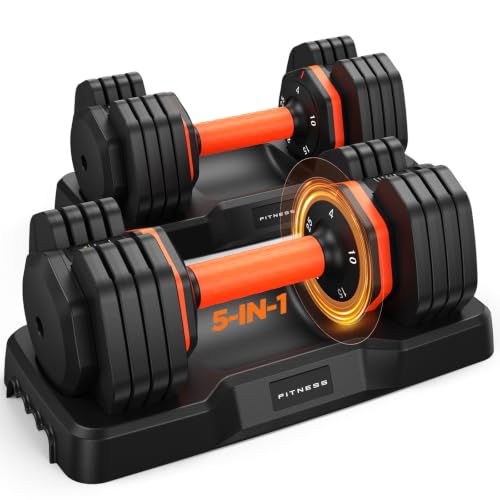
Storage matters more as the dumbbell collection grows. A proper rack keeps handles off the floor, improves access, and reduces clutter around the bench and rack. Adjustable dumbbells save space only when their storage trays remain organized and the adjustment process does not slow down every set. If your dumbbells live in a corner, plan for how you will retrieve the heavier pair without twisting awkwardly or lifting around other equipment.
Step 5: Avoid the Dumbbell Buying Mistakes That Waste Money
The first mistake is buying for ego. A dumbbell is useful when it produces quality training, not when the number stamped on the end looks impressive. Improper dumbbell use can contribute to sprains, strains, and fractures, as noted by ExercisePick. The fix is simple: control the load, keep the movement repeatable, and progress gradually.
The second mistake is buying a full set before you know your useful ranges. A complete rack can be excellent for a dedicated home gym, but it costs more, occupies more floor space, and may include weights you rarely touch. If you are still learning your program, start with the ranges that cover your main exercises and expand when the training log proves you need more.
The third mistake is treating low price as value. Cheap coatings, poor knurling, loose adjustment parts, and weak storage can make a dumbbell frustrating every time you train. Compare the total setup: usable load range, handle quality, adjustment speed, footprint, flooring requirements, replacement options, and warranty. A dumbbell that lasts through years of regular training is cheaper than replacing a bargain product twice.
The final mistake is ignoring the rest of the gym. Dumbbells should complement your barbell, power rack, bench, cable machine, bumper plates, kettlebells, and resistance bands. Do not spend the entire equipment budget on dumbbells while using an unstable bench or an unsafe floor. The strongest program still depends on a stable training environment.
Frequently Asked Questions
What dumbbell weight should a beginner start with?
Start with a load that allows the planned repetitions with controlled technique and no major form breakdown. The correct starting weight varies by exercise, training history, and individual strength. ExercisePick recommends seeking personalized guidance from a fitness professional when needed.
Are adjustable dumbbells better than fixed dumbbells?
Neither is automatically better. Adjustable dumbbells are attractive when floor space and storage are limited. Fixed dumbbells are faster to grab and usually simpler during high-volume sessions. Choose the format that supports your training without creating adjustment, stability, or storage problems.
Are rubber dumbbells safe for home gym flooring?
They are generally more floor-friendly than bare metal, but no dumbbell makes careless drops safe. Use suitable rubber flooring, avoid unnecessary drops, and confirm that the floor can handle the equipment and training style.
How heavy should dumbbells be for a home gym?
Choose weights based on your main movements and progression needs. Presses, rows, squats, lunges, and carries usually require more load than curls or lateral raises. Your dumbbell range should match the exercises you will actually perform, not an arbitrary number.
Do I need a complete dumbbell set?
No. A complete set is convenient but expensive and space-intensive. Many lifters can start with a few useful pairs or a reliable adjustable system, then add heavier or lighter increments as their program demands.
When should I increase dumbbell weight?
Increase the load after you can complete the planned work consistently with good form. If adding weight causes shortened range of motion, unstable joints, or uncontrolled repetitions, keep the current load and build repetitions or technical consistency first.
The right dumbbells give you a usable path from clean beginner repetitions to serious compound-lift strength work. Match the weight to the movement, prioritize stable form, choose construction that fits your budget and flooring, and leave enough room to train without obstruction. Before buying, map your exercises, measure your floor space, and select the simplest dumbbell setup that gives you room to progress.


