

How To Choose The Right Gym Flooring In 2026
By Derek Frost
Gym flooring is not decoration. It protects your subfloor, your equipment, and your joints when a loaded barbell comes down hard. Choose the wrong surface and a serious home gym can develop lifted edges, failed joints, surface crumbling, or a slippery training area long before the rack, bench, or cable machine needs replacing.
Quick Answer
Choose gym flooring by the heaviest movement and equipment in each training zone, not by what looks good across the entire room. For free weights and Olympic lifting, specify a surface matched to an anticipated 200–250 kg drop load and verify impact, hardness, density, joint, and warranty data; cardio, mobility, and studio areas can use different performance targets. Buy documented test results, not a thick-sounding marketing claim.
Table of Contents
- Quick Answer
- Our Top Picks
- 1. Map the Gym into Training Zones
- 2. Match the Floor to Your Maximum Drop Weight
- 3. Read the Technical Specifications
- 4. Account for Equipment, Joints, and Daily Abuse
- 5. Judge Value by Performance, Not Price per Square Foot
- Frequently Asked Questions
- Conclusion
- Sources & References
Our Top Picks
Affiliate disclosure: if you buy through these links, we may earn a commission at no extra cost to you.



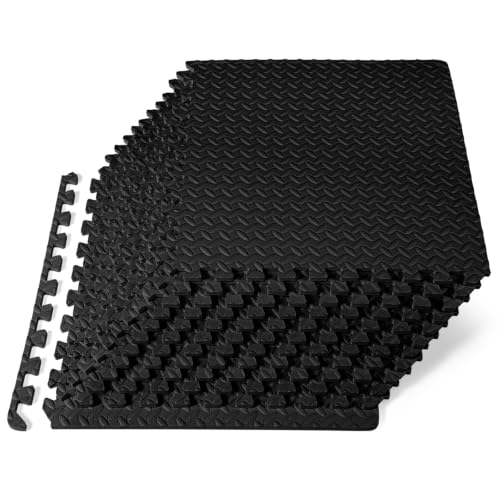
1. Map the Gym into Training Zones
The first mistake I see in home gyms is treating the entire room as one flooring problem. It is not. A free-weight and Olympic-lifting zone has to handle dropped barbells, bumper plates, dumbbells, and kettlebells. A cardio area has a different movement profile. Stretching, warm-up, functional training, and studio work each place different demands on the surface.
Put the power rack or squat rack, lifting platform, and plate-loading area in the highest-protection zone. This is where failed reps, dropped deadlifts, and bumper plates create concentrated impact. The same thinking applies around a weight bench where dumbbells are repeatedly picked up, moved, and set down. Do not assume that a floor suitable for light dumbbell work is automatically suitable for Olympic lifting.
Cable machines, pull-up bars, and resistance bands still need a stable, cleanable, slip-conscious surface, but they do not automatically require the same impact specification as a barbell drop lane. A cable station produces repeated foot traffic and concentrated equipment loads. A pull-up bar creates a landing area beneath it. Resistance-band work needs reliable traction and safe transitions. The point is not to make every square foot indestructible. The point is to put the right performance where the training happens.
2. Match the Floor to Your Maximum Drop Weight
Start with the heaviest realistic impact, not your average training session. If you perform cleans, snatches, heavy deadlifts, or compound lifts at a high RPE, plan for the bar to come down under control at best and get dumped at worst. Free-weight and Olympic-lifting areas are commonly specified for anticipated drops of approximately 200–250 kg, according to the Superstrata guidance provided for this topic.
That figure is an impact requirement. It is not the same thing as the static load sitting on a rack or bench. A loaded barbell resting in a power rack, a bar being re-racked, and a bumper plate hitting the floor create different stresses. Ask whether the published rating covers repeated drops, not merely a one-time laboratory event or a vague statement that the material is “heavy duty.”
Under-specifying the drop zone is false economy. Superstrata reports that flooring rated for lighter loads may develop surface crumbling, edge lifting, and interlocking-joint failure within approximately 12–18 months of heavy barbell use. Once the joints start opening or the edges curl, the floor becomes a trip hazard and stops protecting the equipment properly. You are not saving money if you have to replace the impact area halfway through your training setup.
3. Read the Technical Specifications
Thickness alone is a lazy specification. A thicker product is not automatically the right product for a rack, a barbell lane, or a rehab area. For free-weight zones, MF FLOOR identifies Shore A hardness above 60 and material density above 950 kg/m³ as target durability specifications. Those numbers should be considered alongside documented impact performance and joint behavior, not used as a substitute for them.
Force reduction matters, but the target depends on the zone. MF FLOOR reports a force-reduction target of at least 20% for general fitness areas and more than 35% for aerobic or plyometric zones, measured according to ASTM F2772. A floor for jumping and repeated aerobic movement is solving a different problem from a floor under a power rack. In a strength area, firmness, stability, and predictable footing matter as much as impact absorption.
Traction also needs a proper test metric. MF FLOOR reports a wet dynamic coefficient of friction target of at least 0.42 under ANSI A326.3 and notes that static coefficient of friction is not the relevant metric for this application. For mobility, rehab, or stretching spaces, verify both dry- and wet-slip performance, shock absorption, firmness, cleanability, and the safety of transitions. A floor that feels acceptable when dry can still create risk around cleaning, sweat, or water brought in from outside.
Do not ignore fire and emissions documentation. Many commercial gym environments in the UK require floor coverings to achieve at least a Cfl-s1 fire classification under EN 13501-1. A home gym may not have the same regulatory requirement, but the lesson is still useful: request a third-party test certificate rather than relying only on a declaration of performance. MF FLOOR also identifies ASTM E648 fire performance and FloorScore low-VOC emissions as metrics buyers should verify where applicable.
4. Account for Equipment, Joints, and Daily Abuse
Your floor has to survive how you actually train, not how the room looks in a product photograph. Dumbbells and kettlebells can create hard, concentrated impacts when they are dropped or set down carelessly. Bumper plates land in the same few square feet over and over. A power rack or squat rack keeps load concentrated at its feet. A weight bench adds repeated movement around the rack and dumbbell area. These patterns should determine where the most durable surface goes.
Interlocking joints deserve special attention in any area where barbells or bumper plates are used. The joint is part of the working surface. Edge lifting and joint failure are not cosmetic defects when a loaded bar is being dropped nearby. Check how the flooring is intended to stay aligned, what installation conditions the warranty requires, and whether repeated heavy use is covered or excluded.
Plan transitions as carefully as the main lifting surface. The path from the free-weight area to the cable machine, pull-up bar, cardio equipment, or stretching zone should be stable and predictable. Avoid creating abrupt lips, loose edges, or mismatched surfaces where you carry plates, move a bench, or step down after a heavy set. In a rehab-oriented space, safe transitions are even more important because balance and accessibility are part of the training requirement.
Maintenance is part of durability. The right floor still needs a cleaning method that does not leave the surface slick or degrade the material. Ask for documented cleaning guidance before installation, especially in a basement, garage, or shared training room. A floor that cannot be kept clean without compromising traction is a poor choice for serious daily use.
5. Judge Value by Performance, Not Price per Square Foot
The cheapest flooring is rarely the lowest-cost flooring once replacement, damaged plates, failed joints, and lost training time are counted. Value per dollar means paying for the performance your equipment actually demands. Spend on the barbell drop zone where the floor takes repeated punishment. Do not pay for Olympic-lifting impact performance under a treadmill or in a quiet stretching corner if those areas never see dropped loads.
Warranty language is where weak products get exposed. Read the coverage for repeated drops, edge lifting, surface wear, joint failure, installation requirements, subfloor conditions, cleaning, and commercial or home-gym use. A long warranty with broad exclusions is not strong protection. The useful question is simple: if the floor fails under the training loads the seller says it can handle, what exactly will be repaired or replaced?
Demand test certificates and performance data before you commit. Impact, slip, fire, acoustic, hygiene, accessibility, and VOC requirements should be verified according to the needs of the room. Appearance is not proof. “Commercial grade” is not a test result. If the manufacturer will not provide a relevant certificate or clearly explain which standard was used, you are being asked to trust marketing instead of engineering.
Frequently Asked Questions
Can I use the same gym flooring throughout the whole room?
You can, but it is usually an inefficient specification. Free weights and Olympic lifting need impact protection, while cardio, stretching, warm-up, functional training, and studio areas may need different force-reduction, traction, firmness, or cleanability targets.
How much drop protection does a barbell area need?
Free-weight and Olympic-lifting zones are commonly specified for anticipated drops of approximately 200–250 kg. Match the rating to your maximum realistic impact and confirm that the rating covers repeated drops, not just a general durability claim.
Is thicker flooring always better?
No. Thickness by itself does not prove impact resistance, stability, joint durability, slip performance, or long-term value. Review the complete test data, including impact rating, hardness, density, force reduction, and warranty terms.
What hardness and density should I look for under a rack and barbell?
For free-weight areas, MF FLOOR identifies Shore A hardness above 60 and material density above 950 kg/m³ as target durability specifications. Use those figures with verified repeated-drop performance and joint testing rather than treating either number as a complete buying decision.
What slip-resistance number matters for gym flooring?
MF FLOOR reports a wet dynamic coefficient of friction target of at least 0.42 under ANSI A326.3 and states that static coefficient of friction is not the relevant metric for this application. For mobility or rehab spaces, ask for tested dry- and wet-slip performance and safe, level transitions.
Do fire and low-VOC certifications matter in a home gym?
Requirements depend on the building and jurisdiction, but the documentation still matters. Many commercial gym environments in the UK use a minimum Cfl-s1 classification under EN 13501-1; ASTM E648 and FloorScore low-VOC documentation are also metrics buyers may need to verify for the intended space.
Conclusion
Choose gym flooring by zone, maximum impact, movement profile, and documented performance. Start by mapping the rack, barbell lane, dumbbells, kettlebells, bench, cable machine, pull-up bar, cardio equipment, resistance-band area, and mobility space. Then request the relevant impact, hardness, density, force-reduction, slip, fire, VOC, joint, and warranty data before ordering. If a product cannot prove it can handle your training, it has no place under your 1RM work.


